
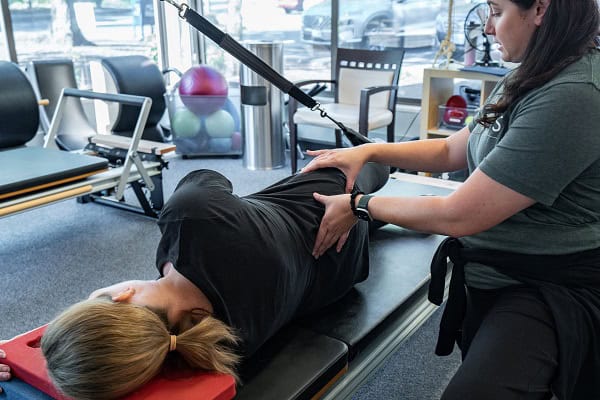
Back pain is one of the most common reasons people begin looking for Pilates.
Many people arrive at Pacific Northwest Pilates after experiencing recurring discomfort—sometimes after years of trying other forms of exercise that did not fully address the problem.
A question we hear often is:
Can Pilates actually help with back pain?
Research increasingly suggests that it can. When taught thoughtfully, Pilates can improve spinal stability, coordination, and movement patterns that support long-term back health.
Several clinical studies have shown that Pilates-based exercise programs can reduce pain and improve daily function for people with chronic low back pain when practiced consistently over time.
If you are exploring options for exercise that support back health, Pilates may offer a helpful and sustainable approach.
Why Back Pain Is So Common
Back pain rarely has a single cause.
More often, it develops from a combination of factors including:
• muscle imbalances
• reduced mobility in the hips or upper spine
• weak stabilizing muscles
• inefficient movement patterns
• prolonged sitting or repetitive postures
For example, many people spend long hours sitting at a desk or working on a laptop. Over time, this can lead to stiffness in the hips and upper back while placing increased demand on the lower spine.
When the body loses balanced movement, certain muscles begin working harder than they should while others become less active. This imbalance can gradually create strain on the joints, discs, and connective tissues of the spine.
Many people know they need exercise, but they are unsure how to exercise safely when their back already hurts.
It’s common for people to search for Pilates exercises for lower back pain, hoping to find a specific movement that will solve the problem. In reality, lasting relief usually comes from improving overall movement patterns rather than relying on a single exercise.
This uncertainty is one of the reasons people begin searching for a Pilates studio in Portland that understands injury-aware movement.
What Research Says About Pilates for Back Pain
Over the past two decades, a growing body of research has examined Pilates as an approach to managing chronic low back pain.
A 2015 systematic review published in the journal Medicine & Science in Sports & Exercise found that Pilates-based exercise programs were more effective than minimal intervention in reducing pain and improving function for individuals with chronic low back pain.
Other studies have shown that Pilates can improve:
• trunk stability
• postural control
• flexibility and mobility
• coordination of movement
Participants in these studies often reported reduced pain levels and greater ease performing everyday activities such as walking, standing, or sitting for longer periods.One reason Pilates may be effective is that it does not focus only on strengthening individual muscles. Instead, it emphasizes how the body works together as a coordinated system.
For individuals recovering from injury, working with an experienced instructor in therapeutic Pilates sessions can be especially beneficial.
What Research Says About Pilates for Back Pain
Over the past two decades, a growing body of research has examined Pilates as an approach to managing chronic low back pain.
Several studies suggest that Pilates-based exercise programs can help improve:
• core strength
• spinal stability
• flexibility and mobility
• coordination of movement
Participants often report reduced pain levels and improved daily function after consistent practice.Unlike some exercise programs that isolate muscles, Pilates focuses on how the body works together as a system. For individuals recovering from injury, working with an experienced instructor in therapeutic Pilates sessions can be especially beneficial.
How Pilates Helps Reduce Lower Back Pain
Pilates works by addressing several movement factors that often contribute to back pain.
Strengthening Deep Stabilizing Muscles
Pilates exercises help activate the deeper muscles that support the spine, including the transverse abdominis, multifidus, pelvic stabilizers, and diaphragm. These muscles function like a natural support system for the spine. Research has shown that individuals with chronic low back pain often demonstrate delayed activation of these stabilizing muscles. Pilates exercises can help retrain this coordination.
Rather than creating rigid bracing, the goal is to develop responsive support that adapts naturally as the body moves.
Improving Mobility in Surrounding Joints
Back pain is frequently influenced by stiffness in areas that surround the spine. Two common examples include:
Limited hip mobility -When the hips cannot move freely, the lower back often compensates during activities such as bending or lifting.
Reduced thoracic spine mobility – Stiffness in the upper back can cause the lower spine to absorb more movement than it was designed to handle.
Pilates exercises often restore balanced mobility by encouraging movement across the entire body rather than focusing only on the painful area.
Developing Better Movement Patterns
One of the most valuable aspects of Pilates is the emphasis on movement awareness.
Clients learn how their body moves during everyday actions such as:
• standing up from a chair
• reaching overhead
• lifting groceries
• getting in and out of a car
Small improvements in coordination can significantly reduce stress on the spine during these daily activities. Over time, these improved movement patterns become automatic.
Who Benefits Most From Pilates for Back Pain
Pilates can be helpful for many individuals experiencing back discomfort. It is particularly beneficial for:
People Recovering From Injury
Many individuals first encounter Pilates after completing physical therapy. Although their pain may be reduced, they often still feel uncertain about how to exercise safely. Pilates can help bridge the gap between rehabilitation and long-term strength training.
People With Chronic or Recurring Pain
For individuals who have experienced back discomfort for months or years, the body often develops protective movement patterns. Gentle, controlled movement can help restore confidence and improve coordination.
People Who Want a Smarter Way to Exercise
Some clients come to Pilates not because of severe pain, but because their previous exercise routines no longer feel sustainable. A structured introduction such as the Quickstart Reformer Pilates Series can help people learn the foundations safely.
Starting Pilates Safely
When someone is dealing with back pain, the quality of instruction matters.
At Pacific Northwest Pilates, instructors adapt exercises based on each client’s:
• movement history
• comfort level
• strength and mobility
• previous injuries or surgeries
Some clients begin with a Therapeutic Pilates consultation, which allows instructors to evaluate movement patterns and determine the best starting point. You can learn more about private Pilates sessions at Pacific Northwest Pilates if you would like personalized guidance.
Pilates and Long-Term Back Health
For many clients, Pilates becomes more than a temporary solution for back pain. Over time, people often report that everyday activities begin to feel easier and more comfortable, including:
• walking longer distances
• gardening or yard work
• traveling
• lifting and carrying groceries
• sitting comfortably during meetings or flights
By building strength, coordination, and body awareness, Pilates helps create a foundation for long-term movement health. Rather than focusing only on relieving symptoms, the goal is to help the body move in ways that reduce stress on the spine over time.
How to Get Started at Pacific Northwest Pilates
If you are dealing with back discomfort and wondering whether Pilates might help, our team is happy to talk with you about the best place to begin.
You can schedule a complimentary 20-minute conversation with a member of our team to discuss your goals and determine the most appropriate starting point.