
You did the work. You showed up to every appointment. You did your home exercises (mostly). And then one day your physical therapist smiled and said something like: “You’re doing great. I think we’re good here.”
And just like that — you were on your own.
If you felt a little lost after that moment, you are not alone. It’s one of the most common reasons people find their way to Pacific Northwest Pilates. Not injury. Not pain. Just that disorienting stretch of time after PT when you’re better than you were, but not quite where you want to be — and nobody has handed you a clear map for what comes next.
That gap is real. And there’s a way through it.
What Is the PT-to-Fitness Gap?
The gap after physical therapy is the period when formal treatment has ended but full strength, confidence, and independent movement haven’t yet returned.
Physical therapy is extraordinarily good at what it does: diagnosing movement dysfunction, reducing pain, and restoring basic function. A skilled PT gets you from “I can barely move” to “I can function reasonably well.” That’s significant.
But functioning reasonably well and moving with strength and confidence are not the same destination.
When PT ends, many people are still weaker than before the injury, uncertain which exercises are safe, and hesitant to push themselves for fear of re-injury. PT is designed to treat. It isn’t always designed to build — and that distinction matters enormously for anyone who wants to stay active, travel, hike, or simply feel capable in their body long-term.
Why Do So Many People Struggle After PT Ends?
Most people leave physical therapy without a clear, progressive plan for rebuilding strength and returning to the activities they love.
The healthcare system is skilled at acute care. It’s less equipped for what comes after. Your physician diagnoses and treats. Your PT restores function to a clinical baseline. Neither job typically includes designing a progressive exercise program tailored to your specific body and goals.
So the handoff happens. You get a sheet of home exercises. You feel better than six months ago. And then what?
Most people do one of three things: return to the gym and hope for the best, avoid exercise almost entirely out of fear, or start a class that moves too fast and doesn’t account for their history. None of these are ideal. And none of them are your fault. The gap exists because healthcare and fitness weren’t designed with a clean handoff in mind.
What Your Body Actually Needs After PT
After physical therapy, most people need progressive strength work, movement re-education, and a guide who understands how to work with a complex body history.
In practice, that means:
- Progressive loading — challenging the body gradually, without triggering the compensation patterns that develop after injury
- Movement re-education — addressing the ways pain and surgery change how you move, often without you realizing it
- Body awareness — learning how your body is actually functioning, so you become a better advocate for yourself in any exercise environment
- A knowledgeable guide — not every instructor has the training to work with someone post-surgery or managing chronic conditions. This matters.
Why Pilates Works So Well for This Phase
Pilates — especially therapeutic and specialized Pilates — addresses exactly the combination of strength rebuilding, movement re-education, and individualized attention the post-PT period requires.
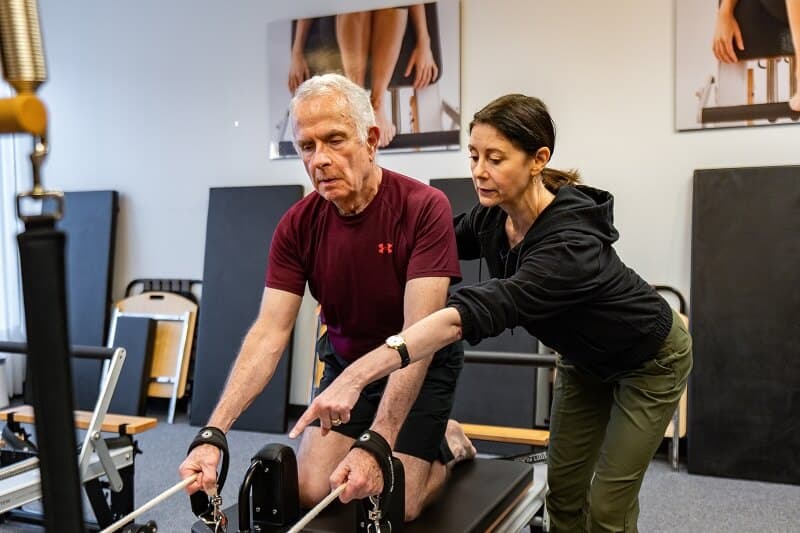
The method was built around movement quality as much as movement quantity. The Reformer provides adjustable resistance that can be dialed up or down based on where your body actually is on a given day. And at a well-trained studio, instructors are specifically equipped to work with people who have complex histories.
We’ve worked with clients post-surgery, post-fracture, and post-everything-in-between. One client recovered from two shoulder replacements and a broken leg — she’s been with us for seven years and is doing beautifully. Another client, at 80, returned from a trip with a photo of himself mid-bungee jump off a mountain. Years of Pilates had built the strength and confidence to say yes to that.
Cool? We think so too.
You Don’t Have to Figure This Out Alone
Here’s something we hear from new clients regularly: “I’ve been trying to figure out what to do on my own for months.”
That gap doesn’t have to last months. It doesn’t have to involve false starts, setbacks, or low-grade anxiety about whether you’re doing the right things for your body.
Every new client at Pacific Northwest Pilates begins with a Starter Session — a one-on-one conversation where we learn your history, assess how you’re moving, and figure out where you actually are. From there, we guide you toward the right next step, whether that’s individual therapeutic work, a small group class, or something in between.
The transition out of physical therapy is a moment. It doesn’t have to be the moment where progress stalls.
Book a free 20-minute chat with one of our instructors — no commitment, just a conversation. Or if you’re ready to get started, begin here.
Want to keep learning in the meantime? Join our newsletter — we write about movement, strength, and staying active for the long haul.
Frequently Asked Questions
How long does it take to rebuild strength after physical therapy?
It varies, but most people notice meaningful improvements within 6–12 weeks of consistent, properly guided work. Building full resilience and confidence often takes longer — and is worth every bit of the effort.
Can I go straight from PT to a regular gym or group fitness class?
Sometimes. It depends on the injury, your movement patterns, and whether the environment can adapt to your needs. Many people benefit from a transitional phase with more individualized attention first.
What makes Pilates different from physical therapy?
PT restores basic function after a specific injury. Pilates builds progressive strength, movement quality, and long-term physical capability. The two complement each other well — which is why many physical therapists refer clients to Pilates after discharge.
Do I need a referral to start at Pacific Northwest Pilates?
No referral needed. New clients begin with a Starter Session so we can understand your history and guide you toward the right next steps.
Pacific Northwest Pilates has served the Portland community since 2001. Founded by Melanie Byford-Young and Leslie Braverman, our studio specializes in thoughtful, science-informed Pilates instruction for people who want to move better and live more fully.