
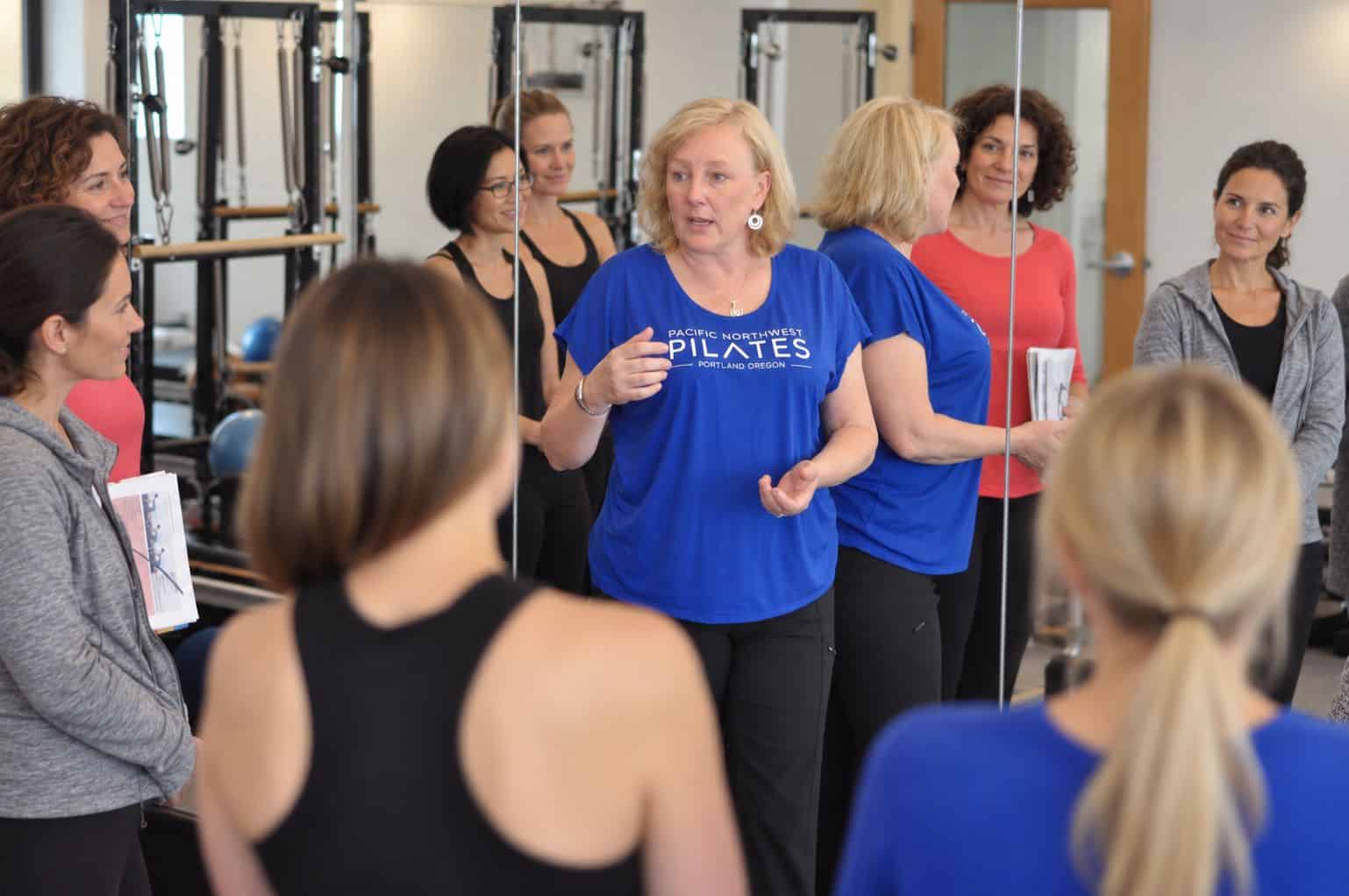
Every body walks in with a history
You know the moment. A new client fills out their intake form, and under “injuries or health conditions” they’ve written a paragraph. Maybe two.
Then the rest of your week fills in:
- The client whose knee flares up every time they push a little harder
- The runner just cleared after ACL surgery, asking when they can run again
- The newly diagnosed osteoporosis client who’s suddenly nervous to bend forward
- The client who asks, “Is this okay for my back?” before every single exercise
If you’ve ever smiled, nodded and quietly thought, I really hope I’m doing this right, you’re in good company. That isn’t a flaw in your teaching. It’s a gap in your education, and it’s one of the most common ones I see.
I know that gap from the other side of the mat, too. As a professional dancer, an injury (and a gifted surgeon) led me to STOTT PILATES®. It’s the work that got me moving again, and more than 25 years later it still shapes how I teach.
The Injuries & Special Populations (ISP) course in the STOTT PILATES® Method is where that gap starts to close. It trades “Which modification do I use?” for a better question: “What is actually happening in this body, and what does it need from me?”
Below, I’ll walk through what makes ISP different, the four-part framework at its heart, and why it changes how you see every client (not just the injured ones). I’ll also share what it’s like to take ISP with us at Pacific Northwest Pilates Education in Portland, Oregon.
What makes the Injuries & Special Populations course different?
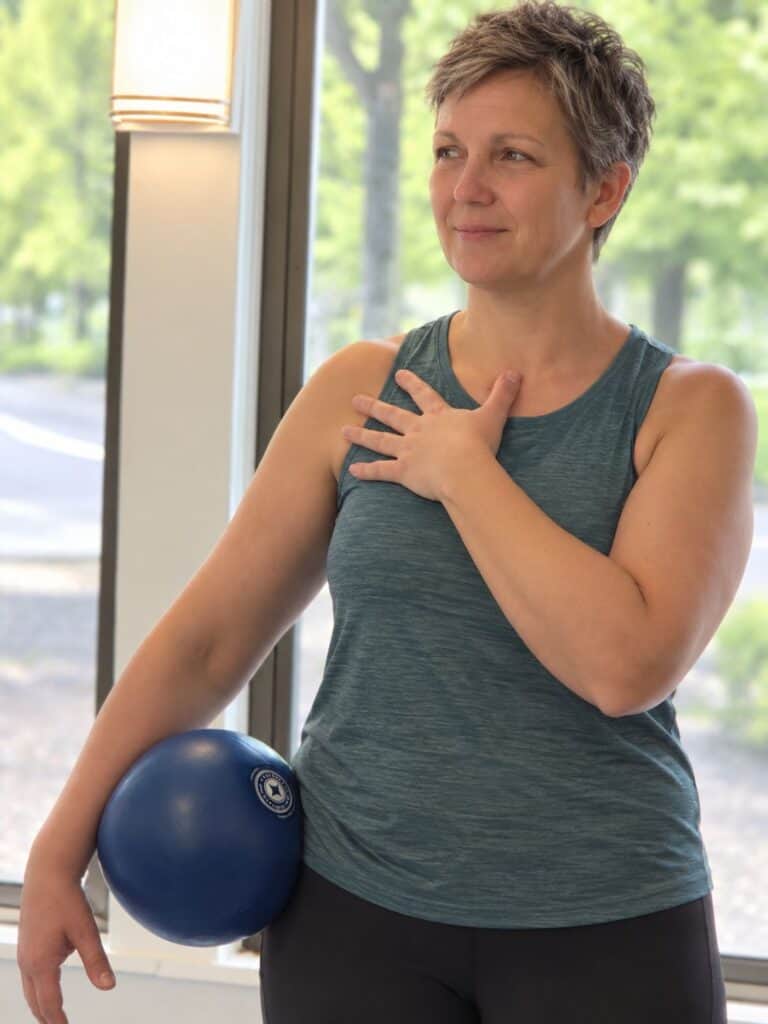
ISP teaches instructors to reason through each client’s needs, rather than memorize modifications for a list of diagnoses.
A lot of injury-focused education follows a recipe: here’s the condition, here’s what to avoid. That’s useful right up until a client walks in who doesn’t match the recipe. Which, in my experience, is most of them.
Here’s a simple example. Two clients tell you, “My knee hurts.” One had meniscus surgery six weeks ago. The other has had achy knees for ten years. Same sentence, completely different session.
ISP is 24 hours of instruction built around clinical reasoning. You learn to ask:
- Where is this tissue in its healing process? A new strain, a recent surgical repair and a long-standing tendon issue ask very different things of you, even in the same joint.
- Is this movement off the table, or does it just need managing? Some movements should be avoided entirely. Many others are fine once you adjust load, range or position.
- Where does my role end? ISP clarifies the instructor’s place in the rehabilitation spectrum: prevention and post-rehabilitation, guided by industry screening standards. We partner with physicians and physical therapists. We don’t replace them.
This isn’t about being afraid of injured clients. It’s about knowing enough to work with them confidently.
What framework does ISP use to look at stability?
ISP looks at stability through four lenses: form closure, force closure, motor control and awareness. Together, they explain how a body is moving.
1. Form closure: stability built into the structure
Some joints are stable largely because of their shape and ligaments. The sacroiliac joint is a classic example. The bones wedge together and dense ligaments reinforce them, so the joint holds steady without much muscular effort.
In the studio: the hypermobile client who melts into every stretch, yet feels wobbly the moment they stand on one leg.
2. Force closure: stability the muscles create
Other joints trade that snug fit for mobility. Think of the shoulder as a golf ball sitting on a tee. It relies on muscles like the rotator cuff to keep it centered.
When structural stability is reduced, by injury, by joint changes from arthritis, or by the ligament laxity of pregnancy, muscles take on more of the work. Knowing which lens you’re looking through changes what you program.
In the studio: the client whose shoulder “feels loose” every time their arms go overhead on the Reformer.
3. Motor control: timing matters as much as strength
The deep stabilizers (transversus abdominis, multifidus, diaphragm and pelvic floor) aren’t there to power big movements. Their job is to prepare and support the joints so the bigger muscles have a steady base to work from.
Strong isn’t enough if the timing is off. That’s why we don’t simply load the big muscles and hope for the best.
In the studio: the client who can hold a plank all day, but whose pelvis rocks side to side the second one leg starts moving.
4. Awareness: the nervous system is part of the picture
Pain and past injury change how people move. Protective habits, like a hitched hip or a braced lower back, can linger long after tissue has healed.
Part of our job is helping clients feel safe moving again. We do that through precise cueing, thoughtful touch and challenges that build gradually.
In the studio: the client whose back healed months ago, but who still holds their breath and braces through every roll down.
Why this framework feels familiar
Here’s what I love about it: none of this is bolted on. It sits naturally alongside the six STOTT PILATES® Principles you already teach. When you cue breathing or pelvic placement, you’re already working with force closure and motor control. ISP helps you understand why, and adapt it for the person in front of you.
Which injuries and special populations does ISP cover?
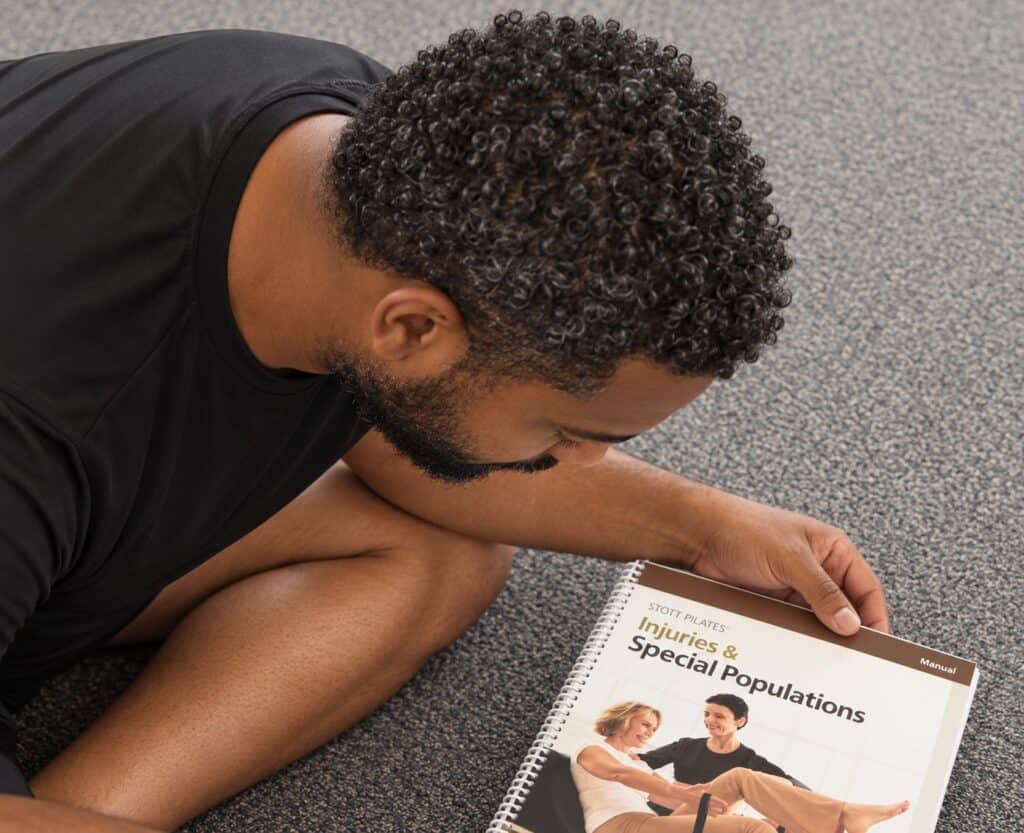
ISP covers common musculoskeletal injuries of the spine, shoulder, hip, knee, ankle and wrist, plus special populations such as pregnancy and osteoporosis.
It also touches on conditions like Parkinson’s disease, MS and obesity, all through the same reasoning framework. And you’ll learn to adapt exercises across Matwork, Reformer, Cadillac, Chair & Barrels.
The goal isn’t to make you a specialist in every condition. It’s to give you a way of thinking you can bring to any client, including the ones no manual anticipated.
Once that foundation is in place, you can go deeper. That’s what STOTT PILATES® Professional Development courses are for. They’re in-depth, theory-rich courses on specific topics, such as Bone Health and Exercise for Osteoporosis, Optimization of the Shoulder Complex and Programming Protocols for Breast Cancer Rehab.
ISP gives you the lens. Professional Development courses sharpen the focus.
Who should take the Injuries & Special Populations course?
ISP is for STOTT PILATES® trained instructors who want to work confidently with injured and complex clients. It’s also required for full STOTT PILATES® certification.
Honestly? It’s for you if you’ve ever:
- Googled a client’s diagnosis in the hallway between sessions
- Given someone your go-to “safe” modification and wondered if it was actually right for them
- Said “let’s skip that one today” without being completely sure why
- Felt the gap between your training and the client actually in front of you
- Wanted to build a niche, like post-rehab, prenatal or older adults
- Looked at your path to full STOTT PILATES® certification and thought, what’s next?
Why take ISP at Pacific Northwest Pilates Education in Portland?
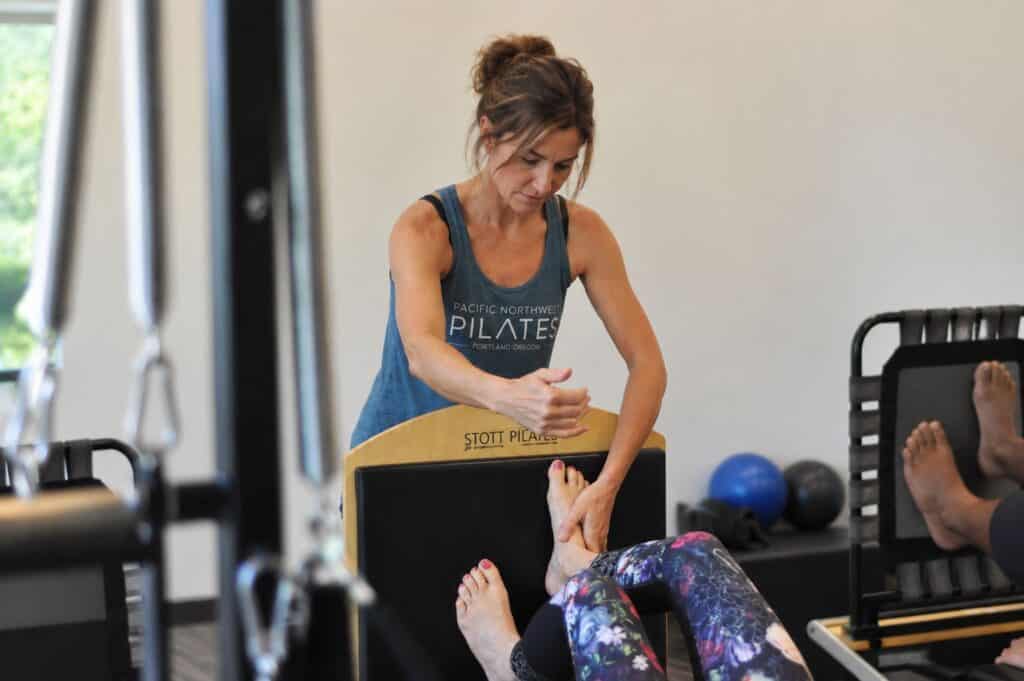
For more than 25 years, Pacific Northwest Pilates Education has been a school and a working studio under one roof, and one of the Pacific Northwest’s longest-established STOTT PILATES® Academy Partners.
You’ll see “STOTT PILATES® Academy Partner” on a lot of studios these days. Merrithew uses that name for every location that offers its courses, whether it’s hosting its very first course or has been training instructors for decades.
Some locations offer ISP once in a while and bring in a visiting Instructor Trainer. Learning it inside an established school and studio is a different experience:
- 25+ years of history. We’ve been training instructors and working with clients in Portland, Oregon since 2001, long known as a Merrithew® Licensed Training Center.
- Taught by our own team. Katherine Brown, STOTT PILATES® Master Instructor Trainer, teaches ISP and works with clients in our studio. She was mentored in part by co-founder Melanie Byford-Young, a co-editor of the STOTT PILATES® Rehabilitation Program.
- Real clients, not just case studies. Our instructor trainers work with clients every week, including many with injuries and complex needs. That experience shows up in every example, cue and question in the room.
- A place to keep learning. ISP isn’t a one-time event here. Professional Development courses, workshops and mentorship are all part of the path you can keep coming back to.
Frequently asked questions
Is ISP a rehabilitation certification? No. ISP prepares Pilates instructors to adapt programming safely for injured and complex clients. Licensed healthcare professionals looking to integrate Pilates into clinical practice should explore our STOTT PILATES® Rehabilitation Program.
What are the prerequisites for ISP? You’ll need to have completed at least one of the following: Intensive Mat-Plus™ (IMP), Intensive Reformer (IR) or Comprehensive Matwork & Reformer (CMR).
Is ISP required for full STOTT PILATES® certification? Yes. ISP is required for all instructors seeking full STOTT PILATES® certification.
How long is the ISP course? ISP includes 24 hours of instruction and theory, typically over four days. There’s no physical review, observation or practice teaching required. You’ll earn 2.4 STOTT PILATES® Continuing Education Credits (CECs).
Who teaches ISP at Pacific Northwest Pilates Education? ISP is taught by Katherine Brown, STOTT PILATES® Master Instructor Trainer, who was mentored in part by physiotherapist and co-founder Melanie Byford-Young.
When is ISP offered? We typically offer ISP each fall at our studio in Portland, Oregon. Current dates and registration are listed on our education page.
The takeaway
Your clients don’t need you to have every answer memorized. They need you to ask better questions, and to understand the body well enough to act on the answers.
That’s what ISP builds.
Ready to see your clients differently? Explore upcoming ISP dates in Portland and register here.
Pacific Northwest Pilates Education is a STOTT PILATES® Academy Partner. ™/® Trademark or registered trademark of Merrithew International Inc., used under license.
About the Author
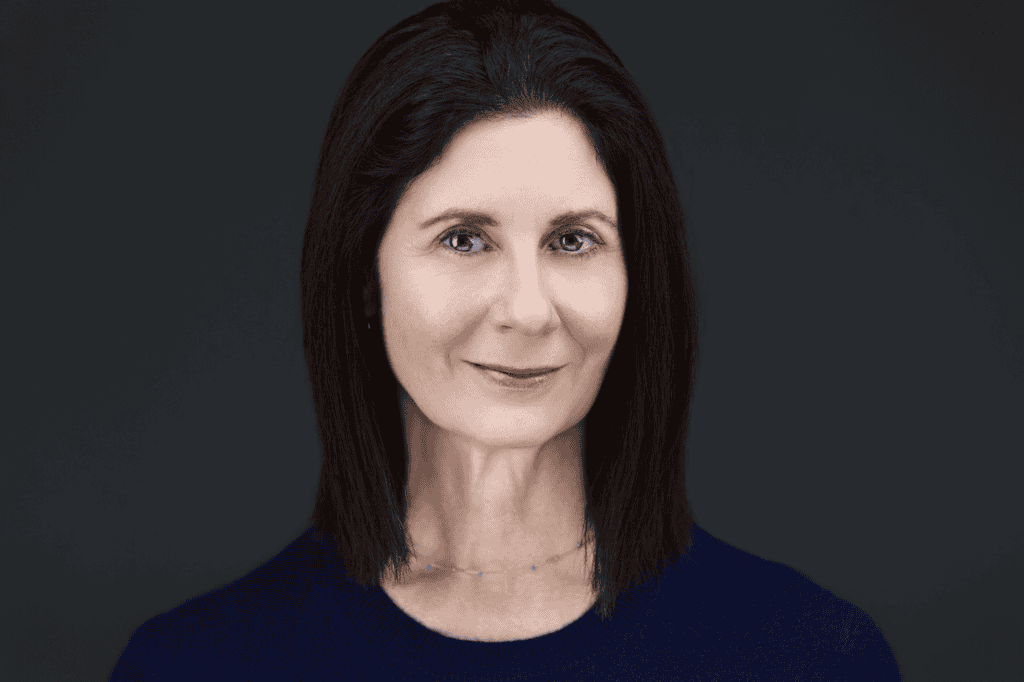
Leslie Braverman is the co-founder of Pacific Northwest Pilates Education and a STOTT PILATES® Lead Instructor Trainer. She spent 15 years as a professional dancer, performing with companies including Oregon Ballet Theatre and Portland’s BODYVOX. She became a STOTT PILATES® instructor in 1997 and has trained instructors since 2000, including Instructor Trainers internationally. Leslie has taught courses in the U.S., Canada, Spain, Japan and Turkey. Back home in Portland, she still works with dancers, athletes and clients every week.