
If you’ve looked at our continuing education schedule lately, you’ve seen it. ZEN•GA®. That little dot in the middle gets a lot of tilted heads in our studio.
Is it yoga? Is it Pilates with the lights dimmed low? Do I need to bring a gong?
I’ll admit the name sounds a little woo-woo. The method isn’t. Underneath it is a practical, teachable approach to movement that pays off with real clients, including the ones whose plank falls apart the second you look away. Below, I’ll cover what ZEN•GA is, why fascia sits at the center of it, and how instructors use it on the mat and the Reformer®.
The short answer: ZEN•GA is a mind-body movement method developed by Merrithew®, the company behind the STOTT PILATES® Method. It blends elements of Pilates, yoga, martial arts, and meditation into flowing, breath-led sequences. Using props and equipment, it is designed to stimulate the fascial system and build endurance, strength, mobility, and stability, along with a sharper sense of body awareness.
Already curious? Browse our current workshop schedule or book a free chat with our education coordinator to talk through where ZEN•GA fits in your training.
What is ZEN•GA?
ZEN•GA is a Merrithew mind-body method that blends Pilates, yoga, martial arts, and meditation into breath-led, flowing movement.
ZEN•GA is built on a simple idea: how you move matters as much as what you move. Instead of drilling exercises one at a time, it teaches people to feel and “see” movement through the whole body. Sequences flow from one shape into the next, paired with the breath. The workouts are playful, and they are also genuinely hard. Clients swing, spiral, rebound, and reach, building strength, endurance, mobility, and stability along the way.
For instructors, ZEN•GA works less like a separate class format and more like a lens. Its principles fold into Pilates, yoga, group fitness, and personal training. Most of our students use it to widen what they can offer clients, not to replace what they already do well.
Why does fascia matter in ZEN•GA?
Fascia is the connective tissue web that wraps and links muscles, bones, and organs. ZEN•GA uses movement designed to load and refresh it.
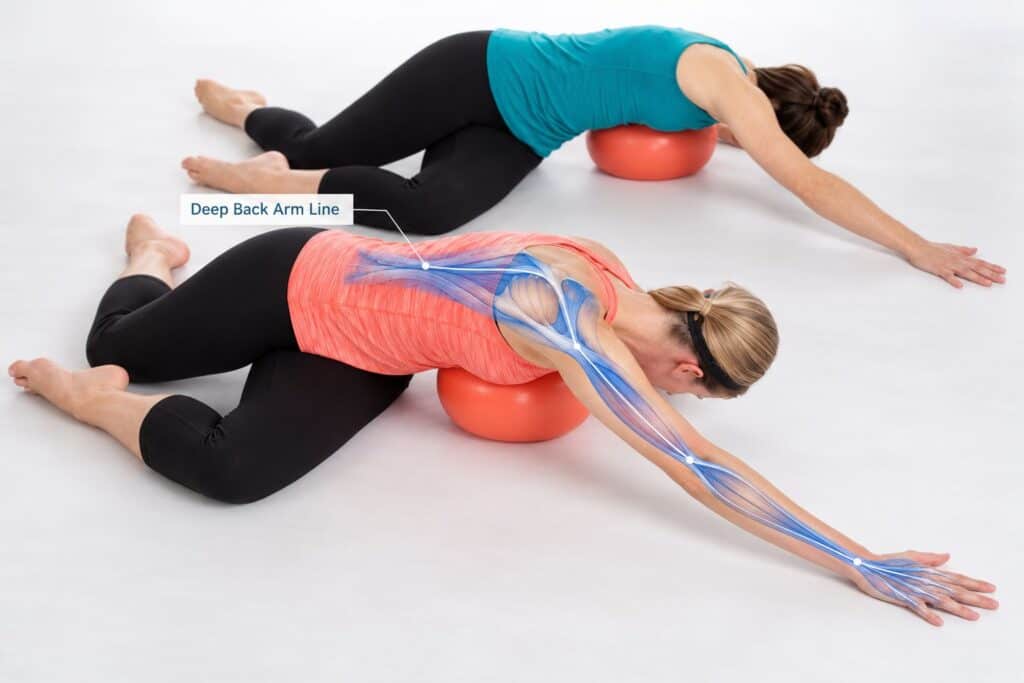
For a long time, fascia was the stuff anatomists cleared away to see the “important” parts underneath. That view has changed. Researchers, clinicians, and movement educators now study fascia as a continuous, body-wide network that transmits force, stores and releases elastic energy, and is packed with sensory receptors.
You already know what fascia feels like when it’s not happy. Think about standing up after three hours at your desk, or stepping off a long flight. Stiff, stuck, a little crunchy. Now think about how you feel after a good walk or a class that really moved you. Katherine Brown, one of our ZEN•GA Instructor Trainers, describes the difference as silk versus a rough dryer sheet. ZEN•GA is interested in helping more of your day feel like the silk.
Those sensory receptors matter, too. Because fascia is richly supplied with nerve endings, it contributes to proprioception, your sense of where your body is in space. Better sensory input can support better movement organization, which is why ZEN•GA talks about the fascial system supporting the neuromuscular system.
A quick honest note. Fascial research is still young, and plenty of claims online run ahead of the evidence. At PNWPE, we teach fascia as one important part of a larger system, not a magic answer. You won’t hear us promise that one sequence “releases” fascia or fixes posture by Friday. What ZEN•GA programming does is give the body the kinds of input fascia appears to respond to: varied angles, elastic and rebounding movement, long multi-joint lines, and changes in tempo.
What are the four ZEN•GA mindful movement principles?
ZEN•GA rests on four mindful movement principles: Breath, Support, Yield, and Flow. Each one builds on the one before it.
Instructors trained in the STOTT PILATES Method are used to working from principles. Ours are biomechanical. The ZEN•GA principles are experiential: they describe how movement should feel.
| Principle | What it means | What you might notice in a client |
|---|---|---|
| Breath | Breath as a tool to energize movement, not a fixed pattern | Less breath-holding, smoother transitions |
| Support | Alignment each person discovers in their own body | Posture that holds up outside the studio |
| Yield | Balancing effort and ease, and using the ground for help | Less gripping, easier hard work |
| Flow | The first three working together | Movement that looks easier because it is |
Breath. If you teach Pilates, you already know breath matters. ZEN•GA skips the choreographed inhale-here, exhale-there patterns. It uses a natural, responsive breath, along with imagery, to keep energy moving through both small, precise movements and big, global ones. The rule of thumb: nothing should feel forced, strained, or stuck.
Support. We’ve all had this client. Beautiful alignment for 55 minutes. Then they grab their shoes and head for the door just as slumped as when they walked in. It’s maddening. Support is ZEN•GA’s answer. Instead of treating posture as a list of boxes to check, it helps each person discover what good alignment feels like in their own body, which makes it far more likely to follow them out the door.
Yield. This is the one that surprises people most, so it gets its own section below.
Flow. Flow is what happens when the first three come together. You’ve felt it: the sweetest golf swing, a dance phrase that just clicks, a Pilates exercise where everything lines up. You feel strong and capable, yet light and easy at the same time. Usually those moments feel like luck. ZEN•GA trains them on purpose.
What does yield mean in ZEN•GA?
In ZEN•GA, yield means balancing effort and ease, and using contact with the floor or equipment so the ground helps you move.
Yield is not giving up, and it’s not collapsing. Katherine describes it as a relationship: between the parts of your body that need to work together, and between your body and its environment. That second part is often overlooked in exercise.
Since we usually meet our environment through our hands and feet, yield often starts there. Instead of just resting on the mat, you get curious about it and press into it with the whole hand or foot. The result can be surprising. A hard position like a plank starts to feel as if the ground is helping you, and pressure spreads more evenly, which can take some strain off the wrists and shoulders.
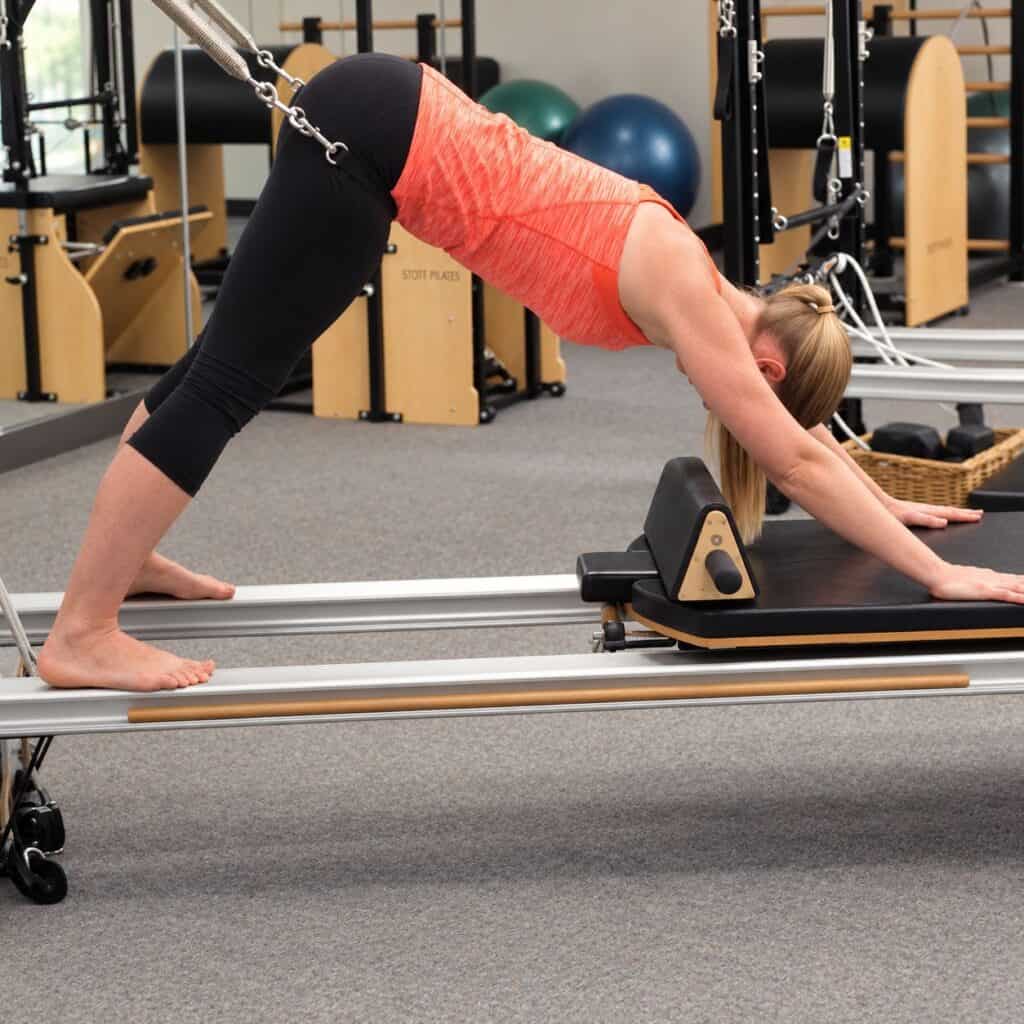
Try this right now. Put your hands flat on your desk or table. First, just let them rest there. Then press gently and get curious about the surface. Smooth? Cool? Notice your fingers, thumb, and the heel of your hand. Most people feel their arms and upper back switch on without any extra effort. That’s yield.
This is often where clients have their “oh, that’s what you meant” moment. And it’s a cue you can use in almost any class tomorrow, whether you teach ZEN•GA or not.
How is ZEN•GA different from Pilates?
Pilates builds precise, controlled movement through set exercises. ZEN•GA explores how movement feels, prioritizing rhythm, breath, and elasticity.
The two are related. They come from the same company and share a respect for breath and alignment. The difference is emphasis.
Pilates teaches control. In the STOTT PILATES Method, we work from six biomechanical principles and a defined repertoire. Clients learn to stabilize, articulate, and move with precision. That foundation is essential.
ZEN•GA asks the next question: once you have control, can you move with variety, rhythm, and ease? It brings in swinging, spiraling, and rebounding patterns that traditional repertoire doesn’t emphasize, and it asks clients to sense their way into movement rather than wait for the next cue.
In my experience, the strongest instructors use both. Precision without adaptability gets rigid. Flow without control gets sloppy. Knowing which one a client needs today is where real teaching skill lives.
What does ZEN•GA look like on the Reformer?
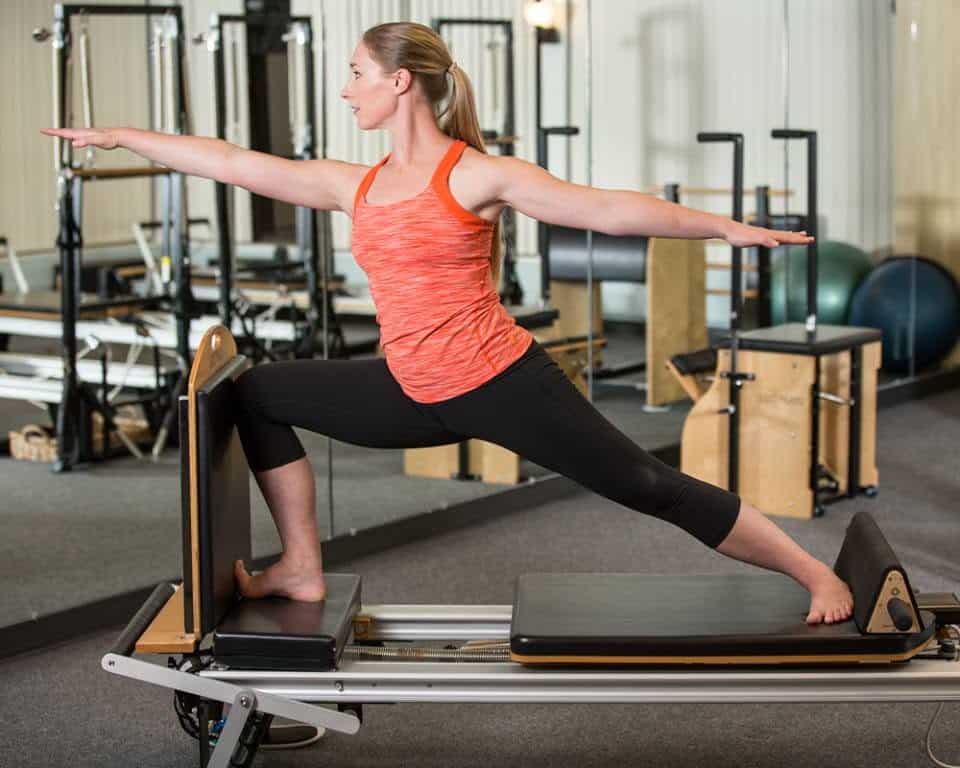
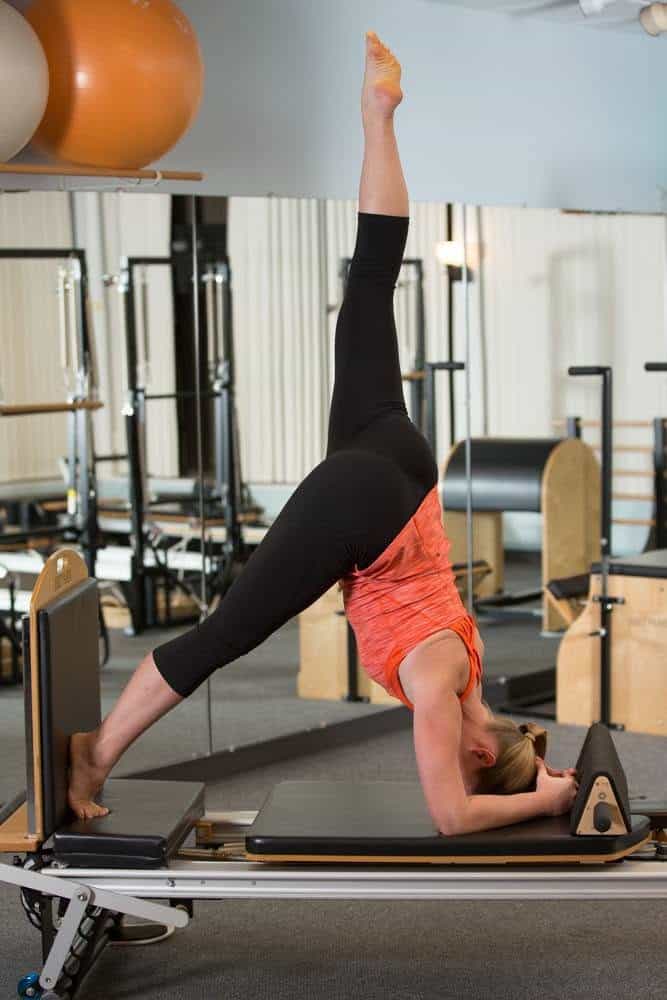
On the Reformer, ZEN•GA uses springs, the moving carriage, and props to create swinging, elastic movement that challenges balance and control.
Remember the mat pushing back in the plank? The Reformer does that on purpose. In most Pilates programming, springs are resistance: something to push or pull against. In ZEN•GA work, they act more like a partner. They load the movement and help return it, so clients feel elastic recoil instead of just effort.
The moving carriage adds a steady demand for balance and adaptability. Accessories like hanging straps, the Reformer Box, and the Vinyasa Triangle™ change the angles and the base of support, so the whole body has to organize around the movement. Picture a client stepping into a lunge on the carriage, letting the springs draw them back, and turning that return into a spiraling reach, all timed with the breath. It’s challenging. It also feels surprisingly smooth, which is the point.
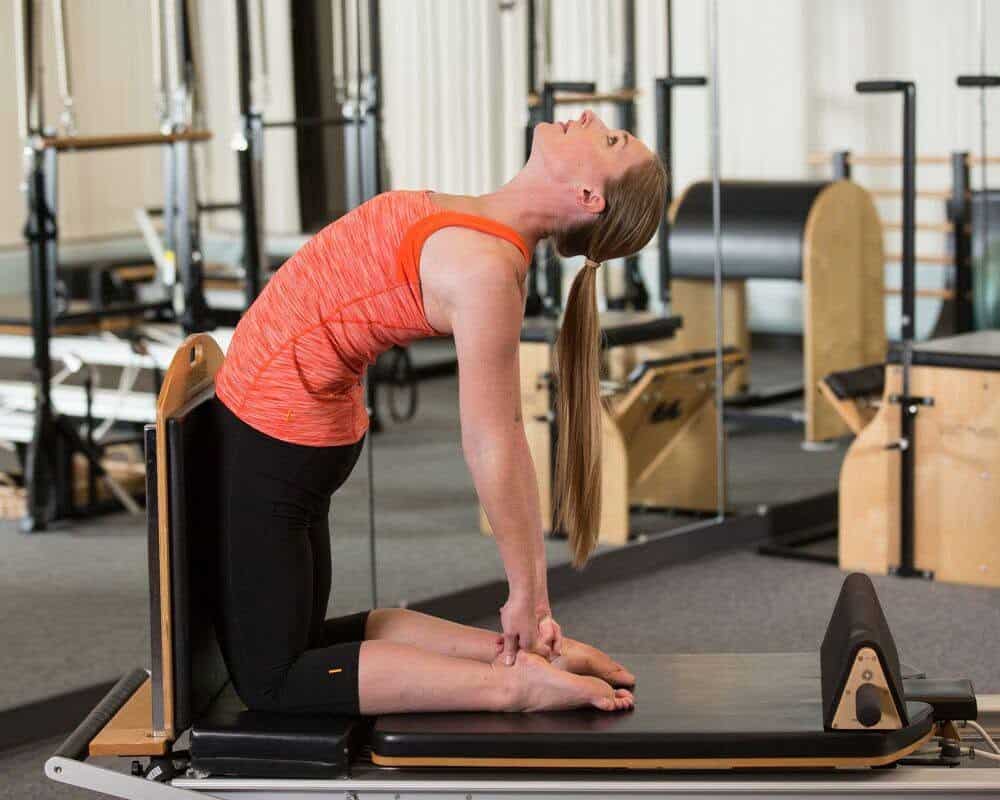
Katherine Brown, a STOTT PILATES Master Instructor Trainer and ZEN•GA Instructor Trainer on our education team, put it this way: “There’s an exciting ZEN•GA hum in the studio. We’re committed to merging fascial science with movement that targets and refreshes fascia, the body’s intricate connective tissue system, in a method of serene, focused, mindful awareness.”
Want to see yield in action? Katherine’s short Yield video goes to our newsletter subscribers, along with new workshop announcements and teaching notes from our Instructor Trainers. Subscribe here.
If the signup form doesn’t open for you (some computer security settings block it), just contact us and we’ll add you to the list.
Who should take a ZEN•GA workshop?
ZEN•GA workshops suit Pilates, yoga, group fitness, and personal training instructors. There are no prerequisites, and they run in any order.
You’ll get the most out of ZEN•GA if any of these sound familiar:
- Your Reformer programming has gotten a little predictable, and you can feel it
- You have clients who are strong but move stiffly, or who can’t carry studio alignment into their day
- You teach yoga, group fitness, or personal training and want a structured way to add mindful, full-body movement
- You’re curious about fascia and want practical tools, not just theory
The ZEN•GA Instructor Foundation Courses (Mat and Equipment) teach the four principles in depth. The workshops apply them across props, equipment, and programming. You can take them in any order. See the full lineup on our courses and workshops page.
There’s a career benefit, too. Under Merrithew guidelines, instructors who complete one or more ZEN•GA workshops can call themselves a ZEN•GA Trained Instructor. Completing a ZEN•GA Instructor Foundation Course earns the title ZEN•GA Qualified Instructor. If you’re building a specialty, that tells clients and employers something specific about how you teach.
Frequently asked questions about ZEN•GA
Is ZEN•GA the same as yoga?
No. ZEN•GA borrows elements of yoga, along with Pilates, martial arts, and meditation, but it is its own method with its own principles and programming.
Do I need to be a certified Pilates instructor to take a ZEN•GA workshop?
No. There are no prerequisites. Workshops are designed for instructors across Pilates, yoga, group fitness, and personal training.
Is ZEN•GA only done on the Reformer?
No. ZEN•GA includes mat-based work with props and equipment-based work on the Reformer and Vertical Frame.
Can ZEN•GA work for clients of any age or fitness level?
ZEN•GA programming includes modifications for a wide range of ages and fitness levels, so instructors can adapt it for many different clients.
What’s the difference between a ZEN•GA Trained and Qualified Instructor?
Trained Instructors have completed one or more ZEN•GA workshops. Qualified Instructors have completed a ZEN•GA Instructor Foundation Course.
Ready to explore ZEN•GA?
Next time a client’s plank starts to fall apart, skip the fourth cue. Ask them what the mat feels like. Then watch what happens.
That’s the heart of ZEN•GA. It isn’t about throwing out what already works in your teaching. It’s about giving you and your clients more ways to move: more rhythm, more variety, more ease, built on the control you’ve already trained. For a lot of instructors, it also becomes a specialty that sets their teaching apart.
If you’d like to try it, start with our current workshop schedule. Not sure where it fits with your certification goals? Book a free chat with our education coordinator. We’re happy to help you map it out.
Want to learn more?
- Why I Chose the STOTT PILATES Method for Our Certification Program
- PNWP’s Top Five Reasons for STOTT PILATES
- Meet the PNWPE Instructor Trainers
Pacific Northwest Pilates Education is a STOTT PILATES Academy Partner (previously called a Merrithew Licensed Training Center), a school and working studio in Portland, Oregon.