
If you are researching how to become a Pilates instructor, you have probably noticed something by now. There is no single route in. STOTT PILATES®, BASI, Balanced Body, Peak Pilates and Polestar all offer respected teacher training, and every program website makes a good case for itself.
So when prospective students ask us what makes STOTT PILATES® training different, we don’t answer by criticizing anyone else. We ask a better question first: what kind of teacher do you want to become?
Here is the short answer. STOTT PILATES® is a contemporary approach to the original work of Joseph Pilates. It is built to teach you why an exercise works, what you are seeing when someone moves, and how to adapt the work for the person in front of you. If that sounds like the way your brain works, keep reading. If you already know you want to talk it through, you can book a free chat with our education coordinator, or read more about why we certify students in the STOTT PILATES® Method.
How Do Pilates Teacher Training Programs Differ?
Pilates teacher training programs differ in philosophy, structure and emphasis, including classical vs. contemporary focus, depth of anatomy and cost.
This is worth understanding before you compare anything else. Each established school has a distinct point of view:
- Peak Pilates offers a comprehensive classical program centered on the original repertoire, sequencing, transitions and flow.
- BASI offers a comprehensive contemporary education with its own way of organizing repertoire and programs.
- Balanced Body offers modular education rooted in movement principles.
- Polestar has strong roots in rehabilitation and movement assessment.
None of these differences are shortcomings. A student who loves classical Pilates may feel most at home in a classical program. A physical therapist may be drawn to Polestar. The goal isn’t to find the school with the best marketing. It’s to find the educational philosophy that fits the professional you want to be.
What Makes STOTT PILATES® Training Different?
STOTT PILATES® training is contemporary, anatomy-based and individualized. It teaches the reasoning behind each exercise, not just the choreography.
A contemporary approach to the original method
STOTT PILATES® keeps the work of Joseph Pilates at its foundation, but the method has evolved alongside modern understanding of exercise science and rehabilitation. Merrithew® describes it as a contemporary approach to the original method, refined with input from physical therapists, sports medicine and fitness professionals.
In practice, that means you don’t just learn to reproduce an exercise. You learn when it should be modified, and why.
You learn the what, how and why
Knowing a lot of exercises is not the same as knowing how to teach. From your first course, you are asked to think through questions like these:
- What is the intention of this exercise?
- Where should the movement initiate?
- What might I see when this person performs it?
- If they aren’t successful, what could I change, and why would I change it?
Most instructors eventually learn to ask these questions. The difference is that STOTT PILATES® education starts the habit early, instead of leaving you to figure it out after five years of teaching.
Anatomy becomes a working language
STOTT PILATES® students need a working knowledge of functional anatomy. Not to pass a quiz and forget it, but because anatomy gives you a language for movement.
Noticing that a client is struggling is easy. Asking why is the skill. Which joints are moving? Which ones aren’t? Is this a mobility issue, a stability issue, or both? Would a different starting position solve it, or a different exercise altogether?
To be clear, this doesn’t mean instructors diagnose injuries or step outside their scope of practice. It means they have better tools for observing movement and making thoughtful choices within it. Plenty of good schools teach anatomy. What stands out here is how thoroughly that thinking is woven through the whole method. (It’s also why many of our students start with Anatomy for Movement Professionals before their first STOTT PILATES® course.)
You teach the person, not the picture in the manual
STOTT PILATES® has a detailed repertoire, clear biomechanical principles and a highly organized structure. You learn a framework for postural analysis and movement observation, and you learn to weigh body proportions, movement patterns and physical conditions when you program.
Precision and adaptability are not opposites. You learn the system well enough to know when and why to adapt it. That matters if you plan to teach a wide range of people rather than one type of client.
How Should You Compare Pilates Certification Cost and Hours?
Compare what each Pilates certification includes and what credential you finish with, not the headline tuition or the classroom hours alone.
This is where research gets confusing, fast. Some programs sell one comprehensive package. Others, including STOTT PILATES®, are modular. Anatomy might be built in or required separately. Manuals, exams, observation hours and practice teaching may or may not be included in the advertised price. Even the word “comprehensive” doesn’t mean the same thing everywhere.
Before you compare numbers, ask each program:
- Which apparatus will I be qualified to teach when I finish?
- How much anatomy education is required?
- How many observation, physical review and practice teaching hours are required?
- Are manuals, exams and certification fees included?
- Is advanced repertoire included or a separate level?
- What continuing education is available after certification?
Only then are you comparing apples to apples.
The modular structure is also worth a second look. You can begin with Matwork or Reformer®, start teaching, then add Cadillac, Chair & Barrels as your career grows. Just make sure you compare equivalent endpoints, not the price of one module against an entire package.
Who Is STOTT PILATES® Training a Good Fit For?
STOTT PILATES® training suits people who ask why, like precision, want to understand anatomy and expect to teach many different bodies.
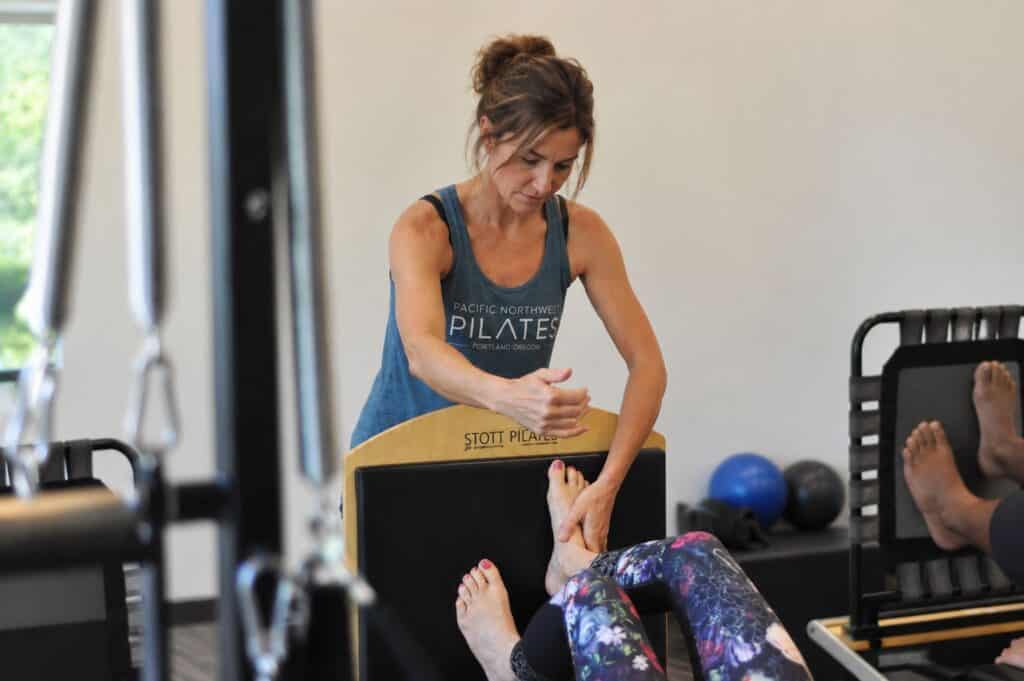
You may find it a strong fit if you:
- want to understand biomechanics rather than memorize choreography
- tend to ask “why?” (a lot)
- like detail and a clearly organized system
- want tools for modifying exercises thoughtfully
- expect to work with clients of different ages, abilities and injury histories
- want education that keeps going as your teaching grows
That won’t describe everyone, and that’s fine. Talented instructors come from many traditions. But if this list sounds like you, STOTT PILATES® deserves a close look.
Why Does Where You Train Matter?
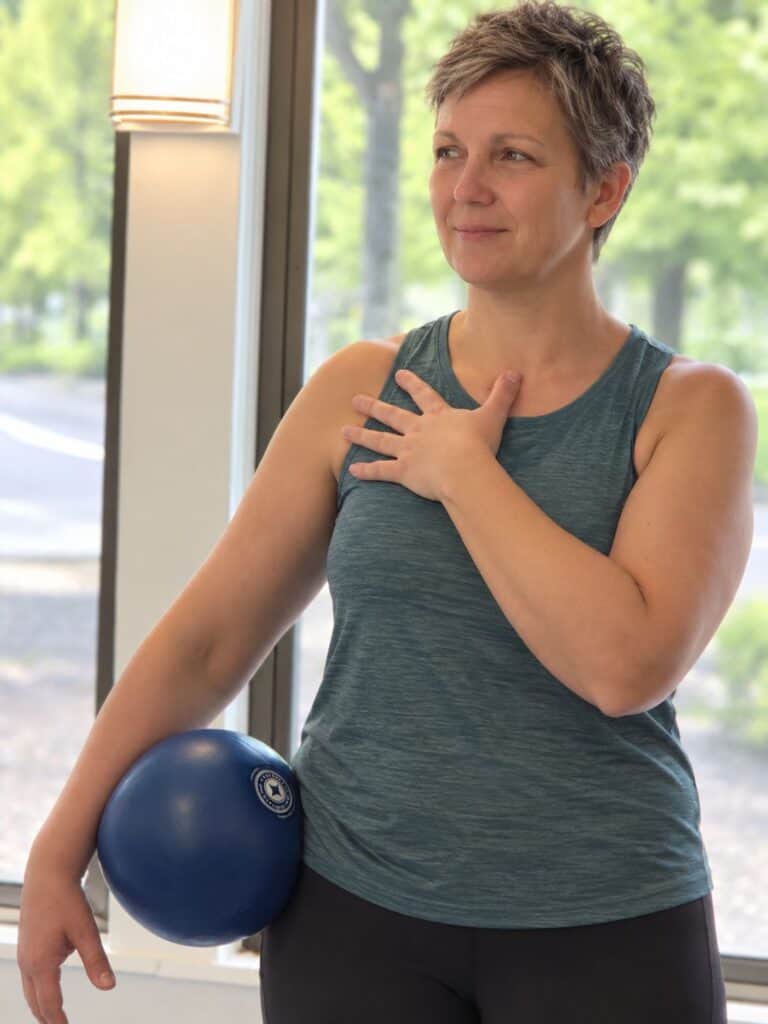
Where you train shapes how much you practice, observe and absorb. A working studio gives you real clients, real instructors and time to learn.
Choosing STOTT PILATES® is one decision. Choosing where to train is another. The curriculum is the same everywhere, but the learning environment isn’t.
Pacific Northwest Pilates Education is a STOTT PILATES® Academy Partner (previously called a Merrithew® Licensed Training Center). That title now covers many kinds of partners, including host sites that open their doors only when a course is in session. We’re something different: a school and a working Pilates studio in Portland, Oregon, where we’ve been teaching clients since 2001. Here is what that means for you as a student.
A place to practice. STOTT PILATES® courses require far more than classroom time. While you’re taking courses with us, you have access to our studio and equipment for physical review and practice teaching. That gap between understanding an exercise and teaching it well is where a lot of the learning happens, and you shouldn’t have to find a Reformer® on your own to close it.
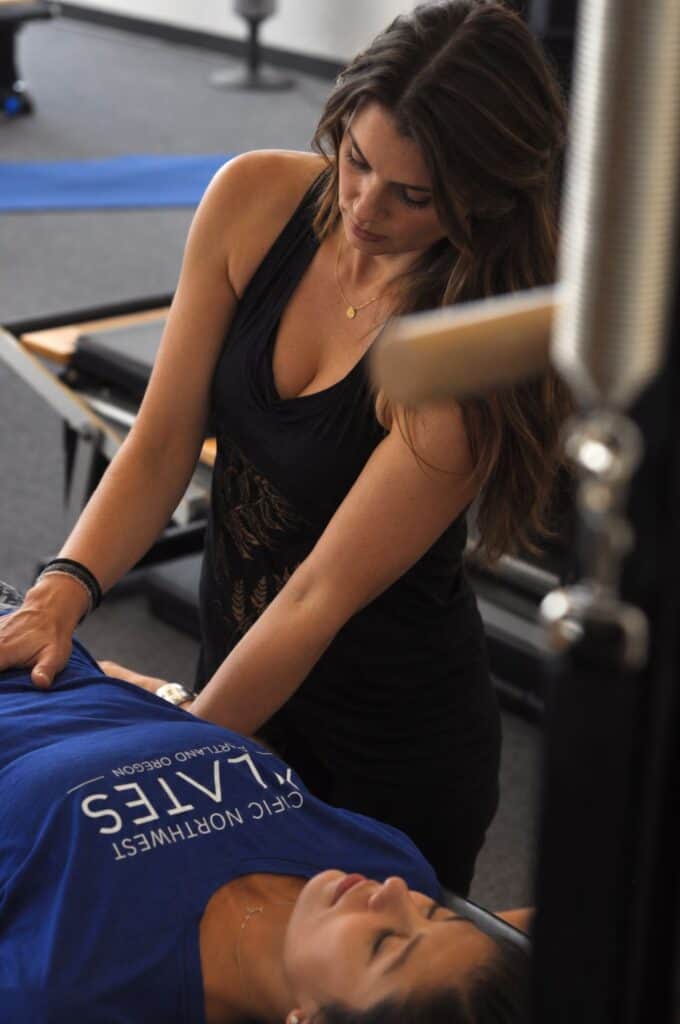
Real teaching to observe. Observation hours aren’t a box to check. They’re your chance to watch an experienced instructor make hundreds of small decisions: when to change a spring, when to modify, when to progress, what to say when the first cue doesn’t land. Watching that happen with real clients is very different from watching a demonstration in a course.
More than one Instructor Trainer. Our education team brings backgrounds in physical therapy, professional dance, athletics and fascial movement. The curriculum is shared, but explanations aren’t. Sometimes a concept doesn’t land until a second trainer says it differently. Seeing several good teachers also reminds you that the goal isn’t to imitate one of them. It’s to find your own teaching voice.
The option to come back. No one absorbs everything in a STOTT PILATES® course the first time. Our students can audit courses they’ve completed for up to three years. Hearing the material again after you’ve started teaching is a completely different experience. The information now has clients and questions attached to it.
Support between courses and certification. There’s often an awkward stretch between finishing coursework and feeling ready for your exam. Students keep practicing, observing and connecting with each other, and Exam Familiarization helps you understand what the certification process involves.
Many students start with anatomy or a single course and keep learning with us for years, into Advanced repertoire, Injuries & Special Populations and continuing education workshops. Some eventually become colleagues.
Frequently Asked Questions
Is STOTT PILATES® classical or contemporary Pilates?
STOTT PILATES® is a contemporary approach to Joseph Pilates’ original method, updated with modern exercise science and rehabilitation principles.
Can I take STOTT PILATES® courses one at a time?
Yes. STOTT PILATES® education is modular, so you can start with Matwork or Reformer® and add apparatus and advanced levels over time.
Do I need to know anatomy before starting STOTT PILATES® training?
A working knowledge of functional anatomy is expected. Many students take an anatomy course first to build that foundation before training.
Does certification mean I’m done learning?
No. Certification is a foundation. Advanced repertoire, Injuries & Special Populations and workshops support continued growth.
Choose the Education, Not Just the Certification
It’s natural to focus on the finish line. How long will this take? What will it cost? When will I be certified? Those are fair questions.
But we’d encourage you to ask one more: how will this education teach me to think?
Eventually the course ends and a real person walks through your door. They won’t look like the photo in the manual. They’ll have their own body, history and goals. Knowing the repertoire matters then. So does knowing how to observe, question, adapt and explain why you made the choice you made.
That’s the kind of teacher STOTT PILATES® education is designed to develop, and it’s the kind of teacher we work to develop here in Portland.
If you’re weighing your options, we’re happy to talk it through. Book a free chat, explore our courses and training options, or, if you’re ready, apply to start the Anatomy or Intensive course series.